
Join us for legal education experiences in extraordinary conservation landscapes.
Safari CLEs™
What is Safari CLEs™?
Safari CLEs is a unique continuing legal education (CLE) platform developed by Law of the Wild to provide immersive legal instruction in unique environments.
Offering a minimum of 12 CLE credit hours per trip, we conduct our Safari CLE programs across the globe - Africa, Asia, South America, and beyond.
We select our program locations for their exceptional biodiversity, using them as living classrooms to examine the threats we actively work to mitigate through our conservation efforts.
Safari CLEs is designed for all legal practitioners - regardless of practice area - as we cover universally applicable legal concepts.
Using wildlife conservation as the lens, participants examine frameworks from domestic law to global treaties, gaining insights directly applicable to litigation, regulatory compliance, and general legal practice.
To ensure a high-quality experience, we limit each program to a small cohort of participants.
100% of Safari CLEs net program revenue supports Law of the Wild’s nonprofit conservation work.

Delivered through three modules in Ecuador - set where biodiversity loss and key conservation initiatives converge - the course combines legal instruction with applied case studies to demonstrate how global treaties, domestic law, and enforcement tools function in practice.
Sign Up for Our Next Trip:
16 Days in the Amazon & Galápagos Islands
October 16-31, 2026
Small Group Size
Ecuador 2026 Program Details
-
Oct. 16 – Quito (Arrival): Quito, Ecuador arrival, where you are met and transferred to a centrally located hotel to recover, refuel, and acclimate. Hotel restaurant stipend provided.
Oct. 17 – Quito (Cultural Introduction & Welcome Dinner): “Meet & greet” breakfast. Cultural tour with lunch in Quito’s historic center. Welcome dinner.
Oct. 18 – Quito (Equator Experience & Program Transition): Breakfast, then tour to Mitad del Mundo to straddle two hemispheres. Lunch, then down time. Relax on your own, prepare for the Amazon.
Oct. 19 – Arrival Amazon: Early breakfast followed by flight to Coca, the gateway to the Amazon. Venture by boat into the rainforest to La Selva Eco-Lodge for lunch and lodging. Evening gathering over dinner.
Oct. 20 – Amazon:Breakfast followed by a full day of guided excursions exploring the extraordinary biodiversity of the Amazon rainforest with lunch. Evening gathering over dinner.
Oct. 21 – Amazon: Breakfast and morning jungle activities followed by CLE Module I sessions (4.5 hours)in an open-air setting with lunch. Evening gathering over dinner.
Oct. 22 – Amazon: Breakfast and full day of guided excursions and immersive experiences with lunch, exploring the extraordinary rainforest. Evening gathering over dinner.
Oct. 23 – Quito Rest Stop: Breakfast, then cruise back via Amazonian waterways to Coca. Return flight and transit to Quito hotel. Lunch followed by time on your own to relax.Evening cocktail hour and hors d’oeuvres.
Oct. 24 – Arrival Galápagos: Flight to Baltra, Galápagos. Tour and lunch en route to Blu Galápagos hotel. Relax, recover.Evening gathering over dinner.
Oct. 25 – Galápagos: Breakfast, then spend a full day with guided excursions and lunch exploring the unique Galápagos archipelago. Evening gathering over dinner.
Oct. 26 – Galápagos: Breakfast, then participate in CLE Module II sessions (3 hours) followed by time to explore on your own before cocktail hour with hors d’oeuvres.
Oct. 27 – Galápagos: Breakfast, lunch, and another full day of group explorations in the islands. Evening gathering over dinner.
Oct. 28 – Galápagos: Breakfast and local excursion followed by participation in CLE Module III sessions (4.5 hours). Evening free time.
Oct. 29 – Galápagos: Love the Galápagos? Good. Breakfast and yet more guided tours with lunch exploring Darwin’s paradise.Evening gathering over dinner.
Oct. 30 – Galápagos: Final full day with breakfast, lunch, and adventures in the Galápagos Islands. Evening gathering with closing dinner and program wrap-up.
Oct. 31 – Quito Rest Stop: Transfer to Baltra for return flight. Overnight at airport hotel in Quito. Hotel restaurant stipend provided. Program ends.
Nov. 1 – Quito hotel breakfast included for those who stayed overnight. Wishing you a safe onward journey! -
U.S. Flight Departure Cities
Reasonably-priced, direct flights to Quito are generally available from Miami, Houston, and New York.
Arrival in QuitoParticipants should plan to arrive in Quito by October 16 to ensure full participation in the program. This timing allows for a smooth arrival and an opportunity to settle in before the program begins.
Altitude Adjustment
Please note that Quito sits at approximately 9,350 feet (2,850 meters) above sea level. Some travelers may notice mild effects of the elevation upon arrival, particularly after a long day of travel, though most adjust comfortably within a day or two. To support a smooth transition, we recommend staying well hydrated, taking it easy upon arrival, and considering a discussion with your medical provider in advance if you have any concerns or sensitivities related to altitude.
In addition to your initial arrival, the program includes a mid-trip overnight stay in Quito between the Amazon and Galápagos segments, and concludes in Quito, which also serves as the departure point at the end of the program.
-
From the Amazonian Rainforest to the Deep Blue Waters of the Galápagos: Exploring Legal Tools to Protect Biodiversity
(12 credit hours: 10 Law and Legal + 1 Professional Responsibility/Ethics + 1 Cybersecurity, Privacy, and Data Protection)
Module I — It’s a Jungle Out There: Untangling the Laws That [Should] Protect Biodiversity introduces the legal architecture governing biodiversity protection across global and domestic frameworks. Set in the Amazon jungle, participants examine foundational principles, including the Environmental Rule of Law and the Rights of Nature, before exploring how key international agreements—such as CITES, CMS, CBD, UNTOC, and the Minamata Convention—operate in practice. Through analysis of relevant case law, the module highlights both the strengths and limitations of these frameworks in addressing illicit activities such as illegal mining, logging, and wildlife trafficking, while also examining the enforcement challenges and ethical obligations that arise in prosecuting wildlife crime.
Module II — Deep Dive for Marine Life: Navigating Jurisdictional Boundaries and Tools Enabling Cross-Border Cooperation shifts to the marine environment of the Galápagos, where jurisdictional boundaries and transnational dynamics shape conservation outcomes. Participants examine key legal frameworks, including UNCLOS, the new High Seas Treaty, and the Agreement on Port State Measures, and how they enable cross-border cooperation and enforcement. The session also considers the role of domestic laws, particularly U.S. statutes with extraterritorial reach, and how they may be brought to bear to regulate commerce, energy development, military activities, and other impacts, while addressing legal and ethical challenges of advancing conservation in an international context.
Module III — Shoring Up Protections: Strengthening Ocean Governance and Enforcement focuses on the practical tools used to secure ecosystems and translate legal authority into action. Continuing their experience in the Galápagos, participants examine marine protected areas, enforcement challenges, and the limitations of existing frameworks in addressing species decline and illicit activity. The module also explores the role of technology in ocean enforcement, including satellite monitoring and digital evidence, and concludes with strategies for mobilizing international, regional, and domestic authorities to turn investigative findings into actionable enforcement.
About Us / Course Faculty
Law of the Wild is a nonprofit environmental law and policy firm dedicated to the protection of wildlife, habitats, and ecosystems worldwide. Our work spans legal advocacy, policy development, and field-based conservation initiatives. Project examples include litigating to secure protections for critically endangered species; training judges, prosecutors, and enforcement officers to more effectively combat environmental crime; and rewilding and reconnecting fragmented landscapes into wildlife corridors. We deliver continuing legal education through our Safari CLEsTM program, set in extraordinary landscapes across Africa, Asia, South America, and beyond.
The course faculty includes Law of the Wild attorney staff and advisors, together with select guest speakers working on the front lines of environmental protection, wildlife crime enforcement, and conservation. Drawing on decades of combined experience in litigation, regulatory practice, international policy development, and transnational conservation law, the faculty brings a practical, real-world perspective to the legal frameworks explored throughout our program.
-
MODULE I
It’s A Jungle Out There – Untangling the Laws That [Should] Protect Biodiversity
Credits: 4.5 Credit Hours (4.0 Law/Legal + 0.5 Ethics) .
Location: La Selva Ecolodge, Yasuní Biosphere Reserve, Ecuador, Amazonia.
Instructors: Nicholas Fromherz, JD, Catherine Pruett, JD, MPA, Brett Sommermeyer, JD, MPA, [Other Instructor TBD].
Date/Time: Wednesday, October 21, 2026 – 1:30pm – 6:00pm
Session 1: Imposing Order on the “Law of the Jungle” (60 minutes) – 1.0 Law and Legal Credits
Architecture of Environmental Law: From global principles to domestic regulations
·The Environmental Rule of Law: Negotiating the path from aspiration to enforceability
The Rights of Nature: The tenets and cases giving ecosystems a voice in the courtroom
Session 2: Biodiversity Protection in International Law: Promises and Limits(120 minutes) - 2.0 Law and Legal Credits
CITES - Convention on International Trade in Endangered Species of Wild Fauna and Flora
CMS - Convention on the Conservation of Migratory Species of Wild Animals
CBD - Convention on Biological Diversity
UNTOC - United Nations Convention against Transnational Organized Crime
Minamata Convention on Mercury
Session 3: Death By a Thousand Blow Darts – Tools to Tackle Crimes that Threaten Amazonia (60 minutes) - 1.0 Law and Legal Credits
Calling out the three bad hombres: illegal mining, logging, and wildlife trafficking
Pick your poison: A portfolio of sanctions and case studies– from administrative remedies to criminal prosecution
Session 4: Don’t Get Bitten by the Ethics Bug: Duties, Risks, and Professional Responsibility in the Wildlife Crime Context (30 minutes) - 0.5 Professional Responsibility and Ethics Credits
—————————————
MODULE II
Deep Dive for Marine Life: Navigating Jurisdictional Boundaries
and Tools Enabling Cross-Border Cooperation
Credits: 3.0 Credit Hours (2.5 Law/Legal + 0.5 Ethics)
Location: Charles Darwin Research Station, Inspiration Hall, Puerto Ayora, Ecuador
Instructors: Orion Cruz, JD, Nicholas Fromherz, JD, Catherine Pruett, JD, MPA, Brett Sommermeyer, JD, MPA
Date/Time: Monday, October 26, 2026 – 9:00am – 12:00pm
Session 1: UNCLOS – the United Nations Convention on the Law of the Sea (30 minutes) - 0.5 Law and Legal Credits
Maritime zones and jurisdictional allocation
Flag state versus coastal state jurisdiction
Conservation obligations under UNCLOS Articles 61–65
Session 2: The “High Seas Treaty”/BBNJ- Biodiversity Beyond National Jurisdiction (30 minutes) - 0.5 Law and Legal Credits
Relationship between BBNJ and UNCLOS
Four core pillars of the BBNJ
Implementation challenges and emerging governance questions
Session 3: PSMA - Agreement on Port State Measures (30 minutes) - 0.5 Law and Legal Credits
Legal Framework of the PSMA
Port State jurisdiction as an enforcement mechanism beyond Flag-State control
Inspection authority, denial of port entry, and information-sharing obligations
Integration with domestic fisheries enforcement regimes
Role of the PSMA in disrupting transnational fisheries crime networks
Multi-State Cooperation in Action
Cases from the outlaw ocean
Session 4: Gazing North: US Domestic Laws that Protect Wildlife and Habitat in the International Context (90 minutes) - 1.0 Law and Legal Credits and 0.5 Professional Responsibility and Ethics Credits
Lacey Act
NEPA: Extraterritoriality through the years
Section 307 of the Tariff Act of 1930
Pelly Amendment to the Fishermen's Protective Act
Section 609 of U.S. Public Law 101-162
High Seas Driftnet Fishing Moratorium Protection Act
Marine Mammal Protection Act
Case studies from abroad in the fight to save critically endangered cetaceans
Check your passion – the ethical admission of evidence to save a species on the brink
——————————
MODULE III
Shoring Up Protections: Strengthening Ocean Governance and Enforcement
Credits: 4.5 Credit Hours (3.5 Law/Legal + 1.0 Cybersecurity, Privacy and Data Protection)
Location: Charles Darwin Research Station, Inspiration Hall, Puerto Ayora, Ecuador
Instructors: Nicholas Fromherz, JD, Dr. Evelyn LaMadrid, Catherine Pruett, JD, MPA, Brett Sommermeyer, JD, MPA, [Other Instructor TBD]
Date/Time: Wednesday, Oct. 28, 2026 – 1:00pm – 5:00pm
Session 1: Marine Protected Areas – From Legal Establishment to Enforcement Challenges (60 minutes) - 1.0 Law and Legal Credits
Legally defining marine protected area boundaries, closures, and take prohibitions
Avoiding the “Paper Park” syndrome through effective enforcement
Case studies: Ecuador, Gabon, Galapagos, Palau, Panama, and South Africa
Session 2: Denizens of the Deep in Decline: Can Law Reverse the Trend?(75 minutes) - 1.25 Law and Legal Credits
Fighting the shark fin trade from source to market
Aiding and abetting: industry driven gaps in Ecuadorian marine fisheries law
On our wish list: Adoption of our model fisheries regulation
Session 3: From Satellite Signals to Courtroom Evidence: Cybersecurity and Data Protection in Ocean Enforcement (60 minutes) – 1.0 Cybersecurity, Privacy, and Data Protection Credits
Maritime monitoring systems as regulated data ecosystems
Cybersecurity risks affecting enforcement reliability
Specialized investigative techniques in organized crime
Privacy and data protection considerations in maritime surveillance
Attorney ethical responsibilities - authentication and admissibility of digital maritime evidence in handling digital enforcement information
Session 4: Strategic Reporting and Enforcement Pathways — Mobilizing International, Regional, and National Authorities Against Illicit Activity (75 minutes) - 1.25 Law and Legal Credits
Put on that superhero cape: Legal strategies for transforming investigative findings into actionable enforcement referrals
Case studies drawn from real-world efforts to prompt enforcement action by reporting illicit activities to domestic regulators, Regional Fisheries Management Organizations (RFMOs), INTERPOL, and foreign authorities
—————————————
Course Conclusion (30 minutes)
Recap of key takeaways
Certification and course evaluation
Opportunities for further engagement with wildlife protection efforts
-
Law of the Wild works with a CLE accreditation facilitator who assists participants with efforts to secure applicable credit once participants register for our courses.
Continuing legal education course accreditation is generally determined on a state-by-state basis and cannot be guaranteed.
-
PRICING
Attorney – Private Room (Single Occupancy)
$16,450 - Enjoy a private room throughout the program.Two Attorneys – Shared Room (Double Occupancy) $15,450 per attorney - Share a room with a colleague and participate in the full program at a preferred rate.
One Attorney Sharing with One Non-Attorney Adult Guest
$15,450 (attorney) | $14,750 (adult guest) - Travel with a non-attorney adult guest and share accommodations throughout the program.*Accompanying guests are welcome to join all excursions and program activities. However, CLE sessions are designed for attorney participants only.
PAYMENT SCHEDULE
A 25% deposit is required at registration to secure and confirm your place in the program.
A second payment of 25% is due June 10, 2026.
The remaining balance is due by July 20, 2026.
Participants registering after scheduled payment deadlines must make payments sufficient to bring their account current at the time of booking. Registrations on or after July 20, 2026 require full payment at the time of booking.
Failure to make required payments by the applicable deadlines may result in cancellation of the participant’s reservation and forfeiture of amounts previously paid. Law of the Wild may, in its sole discretion, permit a late payment upon written request and for good cause shown. Any approved late payment must be received within five (5) days after notice of approval unless otherwise specified by Law of the Wild.
-
Included During Trip:
12 CLE hours.
All domestic lodging in Ecuador
All group tours listed in Trip Itinerary
All domestic flights and coordinated airport transfers within Ecuador (including Quito arrivals and departures within designated transfer windows).
One-time Galápagos entry and transit control fee.
Daily breakfast within Ecuador from October 17-November 1
12 lunches
12 dinners
2 cocktail events.
Not Included:
International flights.
Travel insurance
Medical insurance
Airport transfers outside of designated arrival and departure windows in Quito
Other costs not otherwise identified as included.
-
The following information is intended to help participants prepare for the environments and conditions encountered during the program.
Currency
The official currency of Ecuador is the U.S. Dollar. While many facilities will accept major credit cards, some smaller establishments and local vendors may accept cash only. Participants are encouraged to carry a modest amount of U.S. currency in smaller denominations for incidental expenses, tips, and purchases in more remote or cash-preferred locations.
Health/Travel Preparation
Given the range of environments included in this program – including humid rainforest conditions, higher elevations in Quito, coastal settings, and variable sea conditions – participants are encouraged to consult with their medical providers in advance of travel for any recommended vaccinations or other preventative measures.
Suggested Packing List
In addition to standard travel items and specific personal needs, participants should consider bringing:
Sunscreen
Insect repellent
Lightweight rain gear
Lightweight, moisture-wicking clothing (full length pants, long-sleeved tops) suitable for warm and humid conditions
Hat & sunglasses
Beach towel
Sturdy, water-resistant or waterproof footwear
Beach & swimwear
Binoculars
Camera
Headlamp & batteries
Dry bags for phones and electronics
Travel Insurance
Participants are strongly encouraged to obtain comprehensive trip and medical travel insurance covering trip cancellation, interruption, delays, and medical needs. Given the nature of international travel and advance program commitments, travel insurance may provide important protection against unforeseen circumstances.
-
Participants may reach the Law of the Wild team via our office messaging line. However, as we are frequently outside the United States, we are often most readily available via WhatsApp and email.
Office Messaging Line: +1 206 774 0048, extension 1
Catherine Pruett: +27 (0)79 891 6635 (WhatsApp), catherine@lawofthewild.org
Brett Sommermeyer: +27 (0)79 889 1675 (WhatsApp), brett@lawofthewild.org
Nicholas Fromherz: +591 (6)070 2910 (WhatsApp), nick@lawofthewild.org
Please note that WhatsApp is widely used internationally as a free, internet-based platform for calls and messaging.
While in Ecuador, wi-fi access is available at most program accommodations, though connectivity may be limited in more remote areas.
Upcoming Programs – Details Coming Soon

South Africa
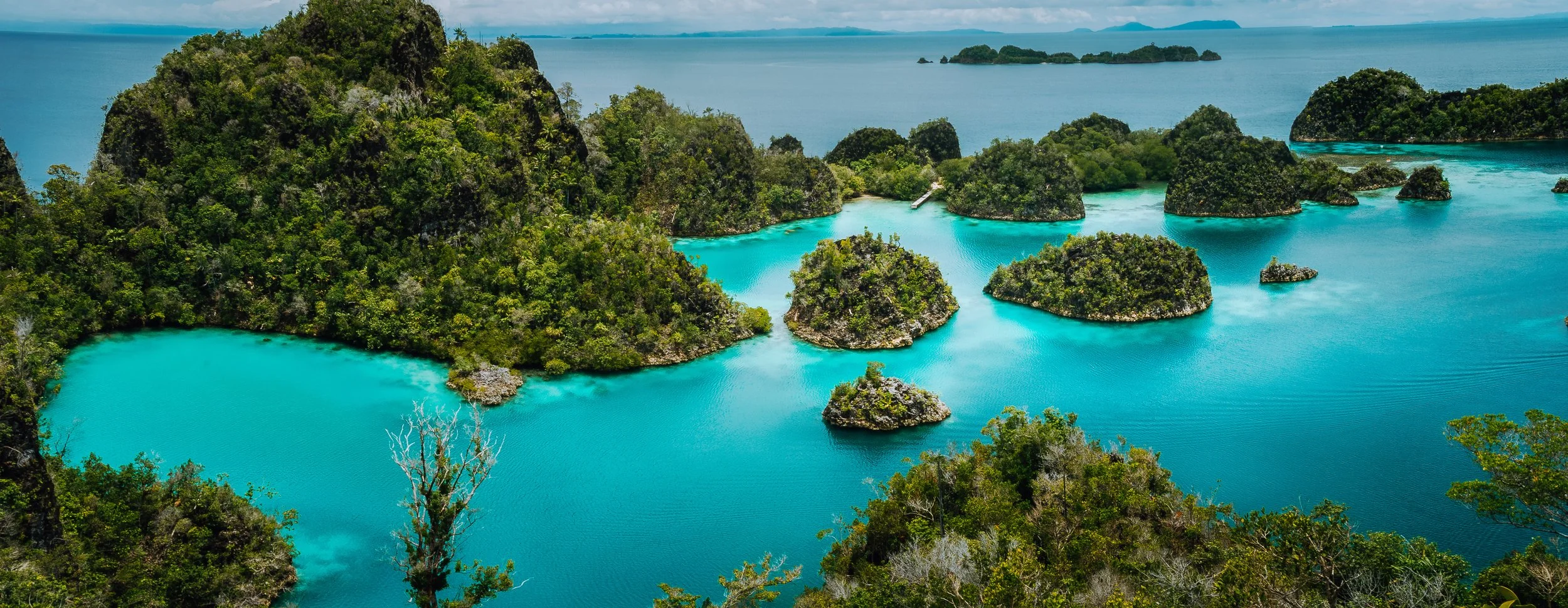
Borneo & Raja Ampat
Safari CLEs Program Policies & Terms
-
Law of the Wild works with a CLE accreditation facilitator who assists participants with efforts to secure applicable credit once participants register for our courses.
Continuing legal education course accreditation is generally determined on a state-by-state basis and cannot be guaranteed.
-
Cancellation by You
We invest significant time and resources in designing and coordinating each of our Safari CLEs programs, including making advance – and often non-recoverable – financial commitments to lodges, transportation providers, and other partners. For these reasons, all deposits and other fees you paid to register for Safari CLEs programs are non-refundable.
In limited circumstances, and where feasible, we may consider substitutions of participants or rebooking to our next scheduled program. However, such arrangements cannot be guaranteed and are subject to logistical and other constraints.
Participants are strongly encouraged to obtain travel insurance to protect against unforeseen circumstances, including cancellation, delay, or interruption.
Cancellation by Us
Should we cancel a program, you will receive a full refund of payments you made to participate in the subject program.
-
Certain events beyond reasonable control—including natural events, government actions, transportation interruptions, or public health developments—may affect the ability to deliver aspects of the program as planned. In such circumstances, adjustments may be necessary.
-
All Safari CLE program materials, including but not limited to written content, presentations, course materials, and audiovisual components, are the property of Law of the Wild or its presenters and are protected by applicable intellectual property laws.
Participants may not record, reproduce, distribute, transmit, or otherwise use program content in any form—whether audio, video, photographic, or otherwise—without the prior written consent of Law of the Wild.
Participation in the program does not grant any license or right to use, reproduce, or share program materials beyond personal educational use.
-
As a condition of participation in any of Law of the Wild’s Safari CLEs programs, each participant, on behalf of themselves and their heirs, successors, assigns, and personal representatives, agrees to release, waive, and hold harmless Law of the Wild, together with its current and former directors, officers, board members, employees, staff, agents, contractors, representatives, volunteers, affiliates, and partners (collectively, the “Released Parties”), from and against any and all claims, liabilities, damages, injuries, losses, or expenses of any kind arising out of or in connection with participation in the programs or attendance at any related activities.
Participants acknowledge that program content is provided for educational purposes only and agree that Law of the Wild and its presenters shall not be responsible for any reliance placed on such information.
Participants further understand that travel and participation in program activities – including, but not limited to, those conducted in remote or natural environments – carry inherent risks. These may include, but are not limited to, risks associated with political unrest, natural disasters, transportation, wildlife, terrain, weather conditions, illness, and limited access to medical facilities. By registering, participants voluntarily assume all such risks and accept full responsibility for their participation.
Law of the Wild shall not be liable for the acts or omissions of third-party providers, including but not limited to lodging operators, transportation companies, guides, or excursion providers.
This waiver and release is binding upon and inures to the benefit of the participant and the Released Parties, and their respective heirs, successors, assigns, and personal representatives, and applies to all participants, including accompanying guests and any individual participating as a substitute under a permitted transfer or reassignment.
-
Accommodations throughout Safari CLEs programs are intentionally varied and reflect the distinctive environments in which each program takes place. Ranging from rustic, safari-style lodging to five-star hotels, each property is selected to provide a high standard of comfort appropriate to its setting, including those in more remote or off-the-beaten-path locations.
Due to the nature of these properties, room sizes, layouts, and features may vary. Some rooms may offer additional space or upgraded positioning, while others reflect more standard configurations.
Room assignments are made at the discretion of the third-party lodging provider. Specific room preferences and requests cannot be guaranteed.
-
Participants must inform us at the time of registration of any medical conditions, mobility considerations, dietary requirements, or other needs that may affect their participation. While every reasonable effort will be made to support participants, certain environments included in our programs are remote and may not be fully adaptable to participant needs.
-
Law of the Wild may photograph or otherwise record elements of its Safari CLE programs for use in educational or organizational materials. Participants who prefer not to have their images included in such materials must notify Law of the Wild in writing in advance of their participation in any program.
-
Enrollment in Safari CLEs programs is confirmed upon receipt of the stated initial required deposit, as set forth in the applicable program’s Pricing and Payment Schedule. Participants are responsible for complying with all subsequent payment deadlines, including interim and final payments, and failure to do so may result in cancellation of the reservation.
Given our commitment to limited group sizes, spaces are allocated in the order in which registrations are completed.
-
Law of the Wild is a 501(c)(3) nonprofit organization under U.S. law. 100% of Safari CLEs net program revenue supports Law of the Wild’s conservation work.
A portion of the program fee may be considered a charitable contribution to the extent permitted by law. In addition, participation in a continuing legal education program may, in certain circumstances, qualify as a deductible business expense. Participants are encouraged to consult their tax advisor regarding the applicability of any such deductions.